
On-Premise/Hybrid Cloud Deployment
Enterprise-Grade Secure RAG Infrastructure
We provide fully secure RAG deployment solutions tailored for enterprises with stringent data governance, regulatory compliance, and security requirements. Our on-premise and hybrid cloud architectures ensure complete data sovereignty while maintaining the performance and scalability benefits of modern AI infrastructure.
Deployment Architecture Options
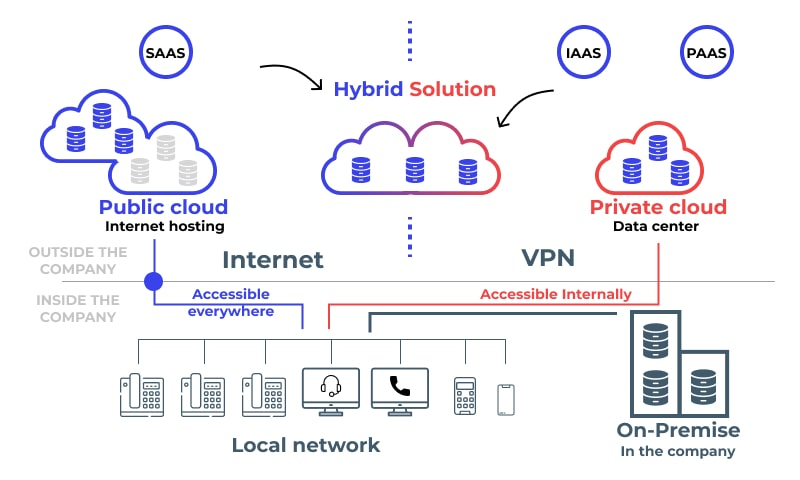
Deployment Model Comparison
| Deployment Model | Best For | Data Location | Control Level | Infrastructure Responsibility |
|---|---|---|---|---|
| Full On-Premise | Highly regulated industries, air-gapped networks | Customer data centers | Complete control | Customer managed |
| Private Cloud | Organizations with existing private cloud investment | Customer private cloud | High control | Shared responsibility |
| Hybrid Cloud | Balance of control and scalability | Split between on-premise and cloud | Granular control | Hybrid management |
| Virtual Private Cloud | Cloud benefits with enhanced isolation | Cloud provider with isolation | Managed control | Primarily cloud provider |
On-Premise Deployment Architecture
Self-Contained RAG Infrastructure
Complete On-Premise Stack
           User Access Layer → API Gateway → RAG Processing Layer → Data Layer → Infrastructure Layer
                ↓                  ↓               ↓                 ↓              ↓
           Internal Users,    Authentication &  Query Processing,  Vector Stores,  Kubernetes,
            Applications       Rate Limiting     Retrieval,         Databases,      Storage,
                                   Generation          Knowledge Bases Networking
Core Infrastructure Components
- Kubernetes Cluster: Managed or self-managed (OpenShift, Rancher, vanilla K8s)
- GPU/CPU Compute: On-premise AI accelerators or standard servers
- Storage Systems: High-performance NAS/SAN for vector storage
- Networking: Secure internal network with optional air-gapped configuration
Hardware & Infrastructure Requirements
Minimum Configuration
          Component              | Development          | Production (Small)   | Production (Enterprise)
          -----------------------|----------------------|----------------------|-------------------------
          Compute Nodes          | 3 nodes, 32GB RAM   | 5 nodes, 64GB RAM    | 10+ nodes, 128GB+ RAM
          GPU Acceleration       | Optional (1-2 GPUs)  | Recommended (4 GPUs) | Required (8+ GPUs)
          Storage                | 1TB SSD              | 5TB NVMe SSD         | 50TB+ NVMe SSD cluster
          Networking             | 1GbE                 | 10GbE                | 25/100GbE with RDMA
          High Availability      | Basic                | Active-Passive       | Active-Active multi-site
GPU Optimization
- NVIDIA DGX Systems: Integrated AI infrastructure
- GPU Server Racks: Custom-configured GPU servers
- Inference Optimizers: TensorRT, Triton Inference Server
- Mixed Precision: FP16/INT8 optimization for efficiency
Hybrid Cloud Deployment Architecture
Intelligent Workload Distribution
Strategic Workload Placement
           Sensitive Workloads → On-Premise Infrastructure → Secure Data Boundary
                ↓                        ↓                          ↓
           Data Processing,      Dedicated Hardware,         Data Never Leaves
           Vector Storage,       Complete Isolation,         Corporate Network
           Query Processing      Full Control                for Sensitive Data

          Non-Sensitive Workloads → Cloud Infrastructure → Elastic Scaling
                    ↓                     ↓                     ↓
         Training, Batch Processing,  Cloud GPUs,           Burst Capacity,
          Development, Testing         Managed Services,     Cost Optimization,
                             Auto-scaling          Global Distribution
Data Flow Architecture
           On-Premise Data Sources → Secure Gateway → Processing Decision → Execution Location
                     ↓                     ↓                 ↓                     ↓
           Sensitive Documents,    Encrypted Tunnel,    Classification:      On-Premise for
          PII, IP, Regulated     Authentication,      Sensitive vs.        Sensitive Data,
            Data                   Access Control       Non-Sensitive        Cloud for Rest
Hybrid Integration Patterns
Pattern 1: Data Residency with Cloud Processing
- Data Stays On-Premise: Source documents and vector stores remain on-premise
- Processing in Cloud: LLM inference and non-sensitive processing in cloud
- Secure Data Exchange: Encrypted, temporary data transfer with audit trail
- Compliance: Meets data residency requirements while leveraging cloud scale
Pattern 2: Tiered Storage Architecture
- Hot Data On-Premise: Frequently accessed, sensitive data locally
- Warm/Cold Data in Cloud: Archived, non-sensitive data in cloud storage
- Intelligent Tiering: Automatic data movement based on access patterns
- Cost Optimization: Balance performance requirements with storage costs
Pattern 3: Burst to Cloud
- Baseline On-Premise: Normal workload handled internally
- Cloud Burst Capacity: Peak loads redirected to cloud resources
- Automatic Scaling: Seamless transition based on load thresholds
- Cost-Effective: Pay for cloud only when needed
Security & Access Control Framework
Zero-Trust Security Model
Core Security Principles
- Never Trust, Always Verify: Continuous authentication and authorization
- Least Privilege Access: Minimum permissions required for each component
- Micro-segmentation: Isolated network segments for different components
- Continuous Monitoring: Real-time security event detection and response
Multi-Layer Security Architecture
           Perimeter Security → Network Security → Host Security → Application Security → Data Security
                     ↓                  ↓                ↓                 ↓                 ↓
            Firewalls, WAF,    Segmentation,      OS Hardening,   Code Scanning,    Encryption at Rest
            DDoS Protection    IDS/IPS, Zero      Patching,       Input Validation, & in Transit, DLP,
                   Trust Network      EDR             Authentication    Access Controls
                   Access
Fine-Grained Access Control
Role-Based Access Control (RBAC)
           User/Service → Authentication → Authorization Engine → Permission Check → Access Decision
                 ↓              ↓                 ↓                    ↓                 ↓
            Identity        Verify Credentials  Check Roles &      Evaluate Specific  Grant/Deny Access
                (MFA, Certificates) Permissions        Resource Access    with Audit Logging
                                    Against Policies   Rights
Attribute-Based Access Control (ABAC)
- User Attributes: Department, clearance level, location
- Resource Attributes: Sensitivity level, classification, owner
- Environmental Attributes: Time of day, network location, threat level
- Policy Engine: Dynamic access decisions based on multiple attributes
Implementation Example: Healthcare Data Access
           Doctor Query: "Show me patient 12345's lab results"
           → Authentication: Doctor's credentials + MFA verified
           → Authorization: Check if doctor is assigned to patient
           → Context: Current location = Hospital network, Time = Normal hours
           → Decision: Grant access to specific lab results
           → Logging: Full audit trail with purpose of access
Data Governance & Compliance
Regulatory Compliance Framework
Industry-Specific Compliance
- Healthcare (HIPAA): PHI protection, audit trails, access controls
- Financial (SOX, FINRA): Financial data protection, transaction logging
- Government (FedRAMP): Security controls, continuous monitoring
- International (GDPR): Data subject rights, privacy by design
Compliance Automation
           Regulatory Requirements → Control Mapping → Automated Checks → Compliance Reporting → Audit Ready
                  ↓                   ↓                ↓                 ↓                  ↓
           HIPAA, GDPR, SOC 2,   Map to Technical   Continuous       Real-time          Pre-built
           ISO 27001, etc.       Controls &         Verification of   Compliance        Audit Reports
                                Configurations    Controls          Dashboard         & Evidence
Data Sovereignty & Residency
Geographic Data Control
- Data Residency Enforcement: Ensure data stays in specified jurisdictions
- Cross-Border Transfer Controls: Manage international data movements
- Regional Deployment Options: Multiple geographic deployment sites
- Compliance with Local Laws: Adherence to country-specific regulations
Implementation Features
- Geofencing: Prevent data transfer outside approved regions
- Data Tagging: Automatic classification of data by jurisdiction
- Transfer Approvals: Manual/automated approval for cross-border transfers
- Audit Trail: Complete logging of data location and movements
Network Architecture & Isolation
Secure Network Design
Segmented Network Architecture
           DMZ Zone → Application Zone → Data Zone → Management Zone → Internet
                 ↓           ↓               ↓            ↓               ↓
            External     RAG API,      Vector DBs,   Admin Access,  Limited,
             Access       Web Apps      Document      Monitoring,    Controlled
                                         Stores        Logging        Outbound
Network Security Controls
- Firewall Rules: Application-aware firewall policies
- Network Segmentation: VLANs and micro-segmentation
- Intrusion Detection: Real-time threat detection
- Traffic Encryption: TLS 1.3+ for all communications
Air-Gapped Deployment Option
Fully Isolated Implementation
- Complete Network Isolation: No external network connections
- Physical Media Transfer: Secure data import/export processes
- Internal Certificate Authority: Self-signed certificates
- Manual Updates: Controlled update processes with validation
Use Cases
- Classified government systems
- Financial trading platforms
- Critical infrastructure
- Research with intellectual property protection
Deployment & Management Tooling
Infrastructure as Code
Automated Deployment
            Terraform/Ansible → Infrastructure Provisioning → Configuration Management → Validation → Deployment
                     ↓                     ↓                          ↓                     ↓           ↓
              Infrastructure Code  Compute, Network,         Software Installation,  Security &   Production
                             Storage Resources         Configuration, Updates  Compliance   Environment
                                              Security Hardening       Checks
GitOps Workflow
- Infrastructure Git Repository: Version-controlled infrastructure definitions
- Automated Pipeline: CI/CD for infrastructure changes
- Environment Parity: Identical development, staging, production environments
- Rollback Capability: Quick recovery from failed deployments
Container Management
Kubernetes Implementation
- Private Container Registry: On-premise Docker registry
- Pod Security Policies: Strict security constraints
- Network Policies: Fine-grained network control between pods
- Resource Quotas: CPU, memory, storage limits per namespace
Orchestration Features
- High Availability: Multi-node clusters with automatic failover
- Auto-scaling: Horizontal and vertical pod autoscaling
- Service Mesh: Istio/Linkerd for advanced traffic management
- Monitoring Integration: Prometheus/Grafana for cluster monitoring
Backup & Disaster Recovery
Comprehensive Data Protection
Backup Strategy
           Real-time Replication → Scheduled Backups → Off-site Copies → Regular Testing → Quick Recovery
                     ↓                   ↓                 ↓                ↓                 ↓
           Synchronous/Asynchronous  Full & Incremental  Geographic      Validation of     RTO: <4 hours
           Replication to Standby    Backups with        Redundancy,     Backup Integrity  RPO: <15 minutes
                Systems                  Retention Policies   Immutable       & Recovery
                                                                Storage         Procedures
Disaster Recovery Tiers
           Tier 1 (Critical): RTO <1 hour, RPO <5 minutes (Active-Active multi-site)
           Tier 2 (Important): RTO <4 hours, RPO <1 hour (Warm standby)
           Tier 3 (Standard): RTO <24 hours, RPO <4 hours (Backup restore)
Business Continuity Planning
High Availability Design
- Active-Active Clusters: Multiple sites serving live traffic
- Load Balancing: Intelligent traffic distribution
- Database Clustering: Multi-master database configurations
- Geo-Redundancy: Multiple geographic deployment sites
Failover Automation
- Automatic Detection: Service health monitoring
- Intelligent Failover: Traffic redirection based on health status
- State Synchronization: Session state preservation during failover
- Recovery Automation: Automatic service restoration
Performance & Scalability
On-Premise Performance Optimization
Hardware Acceleration
- GPU Optimization: CUDA, TensorRT for inference acceleration
- Storage Acceleration: NVMe, RDMA for high-throughput vector operations
- Network Optimization: SmartNICs, RDMA for low-latency communication
- Memory Optimization: Large RAM configurations for vector caching
Performance Benchmarks
          Metric                      | On-Premise Target     | Cloud Equivalent
          ----------------------------|-----------------------|-----------------
          Query Latency (p95)         | <150ms               | <200ms
          Indexing Throughput         | 10K docs/hour        | 8K docs/hour
          Concurrent Users            | 5,000+               | 10,000+
          Vector Search QPS           | 1,000+               | 2,000+
Hybrid Scalability Patterns
Elastic Scaling Strategy
            On-Premise Baseline → Monitoring → Scale Decision → Scaling Action → Optimization
                     ↓                ↓             ↓               ↓                ↓
           Normal Load        Performance     Threshold      Scale Up/Down    Cost-Performance
             Handled            Metrics, Cost   Detection      On-Premise or    Analysis &
            Internally         Tracking                      Cloud Resources   Rebalancing
Scaling Triggers
- CPU/Memory Utilization: >80% sustained usage
- Query Latency: >300ms average response time
- Queue Depth: Growing pending request queue
- Scheduled Events: Known peak periods
Cost Management & Optimization
Total Cost of Ownership Analysis
Cost Components
           Capital Expenditure (CapEx) + Operational Expenditure (OpEx) = Total Cost of Ownership
                      ↓                           ↓                             ↓
             Hardware Purchase,           Power, Cooling,          Complete 3-5 Year
             Software Licenses,           Staff, Maintenance,     Ownership Cost with
             Infrastructure Setup         Cloud Services,         ROI Calculation
                                                                  Support Contracts
Cost Comparison Framework
           On-Premise TCO = Hardware + Software + Facilities + Staff + Maintenance
           Hybrid TCO = (On-Premise Costs) + (Cloud Usage Costs) - (Efficiency Gains)
           Cloud TCO = Subscription Costs + Usage Costs + Data Transfer + Management
Hybrid Cost Optimization
Intelligent Workload Placement
           Workload Analysis → Cost Calculation → Placement Decision → Execution → Cost Monitoring
                   ↓                ↓                 ↓                  ↓             ↓
           Compute, Memory,     On-Premise vs.    Optimal Location   Deploy to     Track Actual
           Storage, Network     Cloud Pricing,    Based on Cost,     Selected      Costs vs.
           Requirements         Data Transfer     Performance,       Environment   Projections
                                                      Costs, Licensing  Security
Cost Saving Strategies
- Reserved Instances: Long-term commitments for predictable workloads
- Spot Instances: Cost-effective for interruptible batch processing
- Auto-scaling: Right-size resources to actual demand
- Data Tiering: Move infrequently accessed data to lower-cost storage
Implementation Roadmap
Phase 1: Assessment & Design (3-4 Weeks)
Current State Analysis
- Infrastructure assessment and gap analysis
- Security and compliance requirements review
- Data classification and sensitivity analysis
- Performance and scalability requirements
Architecture Design
- Deployment model selection
- Network and security architecture
- Hardware and software specification
- Migration and deployment strategy
Phase 2: Foundation Build (6-8 Weeks)
Infrastructure Setup
- Hardware procurement and installation
- Network configuration and security setup
- Kubernetes cluster deployment
- Storage and backup infrastructure
Core Platform Deployment
- RAG platform installation and configuration
- Security controls implementation
- Monitoring and management tooling
- Initial testing and validation
Phase 3: Data Migration & Integration (4-6 Weeks)
Data Preparation
- Data classification and tagging
- Sensitive data identification
- Migration planning and execution
- Validation and quality assurance
System Integration
- Integration with existing enterprise systems
- Access control integration
- Monitoring and alerting configuration
- User training and documentation
Phase 4: Optimization & Scaling (Ongoing)
Performance Tuning
- Optimization based on real usage
- Scaling adjustments
- Cost optimization
- Continuous improvement
Success Metrics & SLAs
Performance SLAs
- Availability: 99.9% uptime for critical components
- Latency: <200ms p95 response time for queries
- Freshness: <5 minutes for critical data updates
- Recovery: RTO <4 hours, RPO <15 minutes for tier 1 systems
Security & Compliance Metrics
- Security Incidents: <1 critical incident per quarter
- Compliance Adherence: 100% of configured controls operational
- Access Violations: <0.01% of access attempts unauthorized
- Audit Readiness: <24 hours to produce compliance evidence
Business Metrics
- Cost Efficiency: >30% savings vs. public cloud for sensitive workloads
- User Satisfaction: >4.2/5.0 for system reliability and performance
- Adoption Rate: >80% target user adoption within 6 months
- ROI Achievement: >2x return on investment within 18 months
Support & Maintenance
Ongoing Management Services
- 24/7 Monitoring: Proactive system health monitoring
- Security Updates: Regular security patches and updates
- Performance Optimization: Continuous performance tuning
- Capacity Planning: Regular capacity assessment and planning
Enterprise Support Tiers
           Tier 1: Basic (8x5, email support, next business day response)
           Tier 2: Standard (12x5, phone support, 4-hour response)
           Tier 3: Premium (24x7, dedicated engineer, 1-hour response)
           Tier 4: Mission Critical (24x7, on-site available, 15-minute response)
Our On-Premise/Hybrid Cloud Deployment solutions provide enterprises with the perfect balance of control, security, and scalability—enabling organizations to leverage advanced RAG capabilities while maintaining complete data sovereignty and meeting the most stringent regulatory requirements.